Do you like to garden? Help support the health and wellness of your neighborhood and community by sharing your harvest through the ‘Plant a Row for the Hungry Montgomery’ Campaign. As local gardeners enjoy the abundance of their spring harvest, the UT/TSU Montgomery County Extension and Master Gardeners in the Clarksville TN area are asking residents with excess garden produce to consider donating it to local food banks. According to the Society of St. Andrews webpage, the amount of food already wasted in the U.S. this year: 44,712,941,965 pounds. This waste happens in the fields, transportation, supermarkets, restaurants, and homes. At the same time about one in seven Americans is considered food insecure. This number of people in lines for food assistance has increased substantially due to the COVID19 pandemic. These are people who lost their jobs through no fault of their own: restaurant workers, dog walkers and house cleaners, the people who cut our hair or polish our nails. This list goes on and on.
In Montgomery County, early gardeners are harvesting cool-season vegetables and fruits such as strawberries, radish, various greens, spinach, onions, beets and so much more that are especially plentiful this time of year. As the weather gets warmer, our gardens will soon flourish with tomatoes, peppers and sweet corn as well as blueberries, blackberries and such. Late summer and early fall will offer peach, apple and pear; and, oftentimes these trees produce more fruit than one person can make use of. Rather than letting these nutritious fruits and vegetables go to waste, residents can donate them to food banks, ensuring that everyone in our community has access to fresh, seasonal fruits all year long. Anyone with excess backyard produce is encouraged to donate, regardless of the size of the donation.
The Society of St. Andrews Gleaning Program helps bridge the gap between local food surplus and food insecurity by working with Tennessee farmers, ranchers and backyard gardeners to collect fresh fruit and vegetables that might otherwise not be used or have a market and distribute them to those in need. Farmers are encouraged to participate and should contact Second Harvest Food Bank or Society of St. Andrews to organize large donations.
Fresh produce is a vital part of any healthy diet, and too often it’s a sacrifice people make when money is tight. Donations made by local farmers and gardeners like these do much more for the community than simply feed the hungry; they also work to break the systemic cycles of poverty by exposing a wide range of people to the many benefits of locally grown food.
• Plant an extra row of food in your garden dedicated to ‘Plant a Row for the Hungry Montgomery’.
• Harvest and donate the produce to food pantries located throughout the county.
• Volunteer to help harvest food from local farms, orchards, and backyard gardens who participate in Society of St. Andrews Gleaning Program
• Donate seeds, soil or plant starts to be distributed to Plant a Row for the Hungry Montgomery gardeners (contact Karla directly).
• For more information or to sign up for the program visit: https://extension.tennessee.edu/Montgomery/Pages/plant-a-row.aspx
• Drop off produce at a participating food bank and log your pounds donated at site above!
Local Participating Food Banks: *If you would like for your food bank to be involved, please contact Karla Kean*
Urban Ministries:
217 S. 3rd Street, Clarksville TN
931-648-9090
Drop off times: Monday – Wednesday; 8:00 am – 12:00 pm
Loaves and Fishes:
215 Foster St, Clarksville, TN 37040
931-645-9020
Drop off times: Monday – Saturday; 8:00 am – 12:00 pm
Manna Café:
605 Providence Blvd, Clarksville, TN 37042
(931) 933-0970
Drop off times:
Monday – Friday; 10:00am – 4:00 pm
Plant a Row for the Hungry Montgomery Campaign Contact:
Karla Kean, UT/TSU Montgomery County Extension Agent
931-648-5725 or kkean@utk.edu



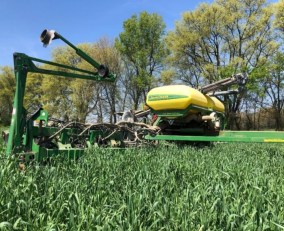 I will preface this article, by saying that after you read this, you will not have the “one size fits all” answer! With more growers planting cover crops as part of a soil health management system, I get this question a lot. “Should I plant green or wait for the cover crop to completely terminate?” My answer most of the time, like many things in production agriculture is, “it depends”. Cover crop management strategies will be different for every grower depending on equipment capabilities, field conditions, inherent soil properties, weather conditions, and the list goes on.


 Montgomery County Soil & Water Conservation District