Tennessee announces Conservation Stewardship Program 30-day deadline extension

Natural Resource Conservation Service – Tennessee has announced an extension to the 2023 Conservation Stewardship Program (CSP) Classic and Inflation Reduction Act application deadline. Tennessee agricultural producers who wish to be considered for the current fiscal year funding should apply by Monday, September 11, 2023.

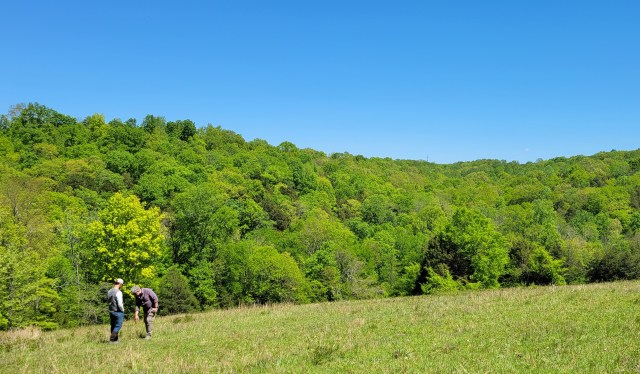
pollinator field 2021Through CSP, Natural Resource Conservation Service helps farmers and ranchers earn payments for maintaining their current level of conservation across their entire operation. CSP provides the opportunity to expand their conservation activities by adopting new technologies and management techniques. The program provides many benefits including increased crop yields, decreased inputs, wildlife habitat improvements, and increased resilience to weather extremes. CSP is for working lands including cropland, pastureland, rangeland, nonindustrial private forestland, and agricultural land under the jurisdiction of a tribe. Farmsteads and other associated agricultural lands are also included. CSP also provides specific support for organic and transitioning to organic producers.

CSP is a program made for farm operators. To be eligible, contract participants must meet Farm Bill Program eligibility in conjunction with the Farm Service Agency, including meeting the highly erodible land and wetland compliance requirements and the adjusted gross income limits.

The application deadline is September 11, 2023, however through the streamlined application and contract approval approach, applications will be assessed and ranked as they are submitted to local USDA Service Centers. NRCS Tennessee will be utilizing an ACT NOW approach. Based on the availability of funds, applications with a score greater than one point will be preapproved once assessed and ranked until funds have been expelled.

Interested producers looking to increase their level of conservation across their operation in Montgomery county can apply for CSP within our office – 25 Jefferson St, Clarksville or by calling 931-368-0252 x 2.

USDA is an equal opportunity provider, employer and lender.

Posted in Uncategorized | Leave a comment

2023 HINTON SCHOLARSHIP RECIPIENTS SELECTED

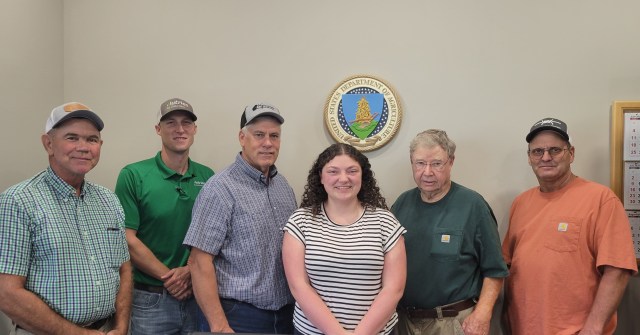
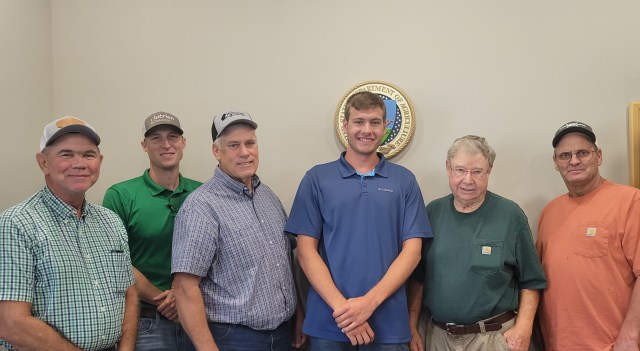
CONGRATULATIONS to the 2023 David E. Hinton Scholarship recipients, Haley Foster and Hagen Albright! Haley is a sophomore majoring as a veterinarian technician and Hagen will begin his college journey as a ag-business major!

winner H Foster w board

l to r: Richard Davis, Cody Greene, Johnny Head, Haley Foster, Paul McKinney, and Jim Alley.

The Montgomery County Soil & Water Conservation District is proud to support agricultural endeavors in the classroom!  Students in agriculture and conservation are our future!

winner H Albright w board

l to r: Richard Davis, Cody Greene, Johnny Head, Hagen Albright, Paul McKinney, and Jim Alley.

Check out our EDUCATION page for more information and when to apply for this annual scholarship.

Posted in Uncategorized | Leave a comment

INFORMATIVE TIMELY TIPS FOR GRAZING

Summer Mowing, Controling Flies, and Pasture Condition Scoring BY GREG BRANN

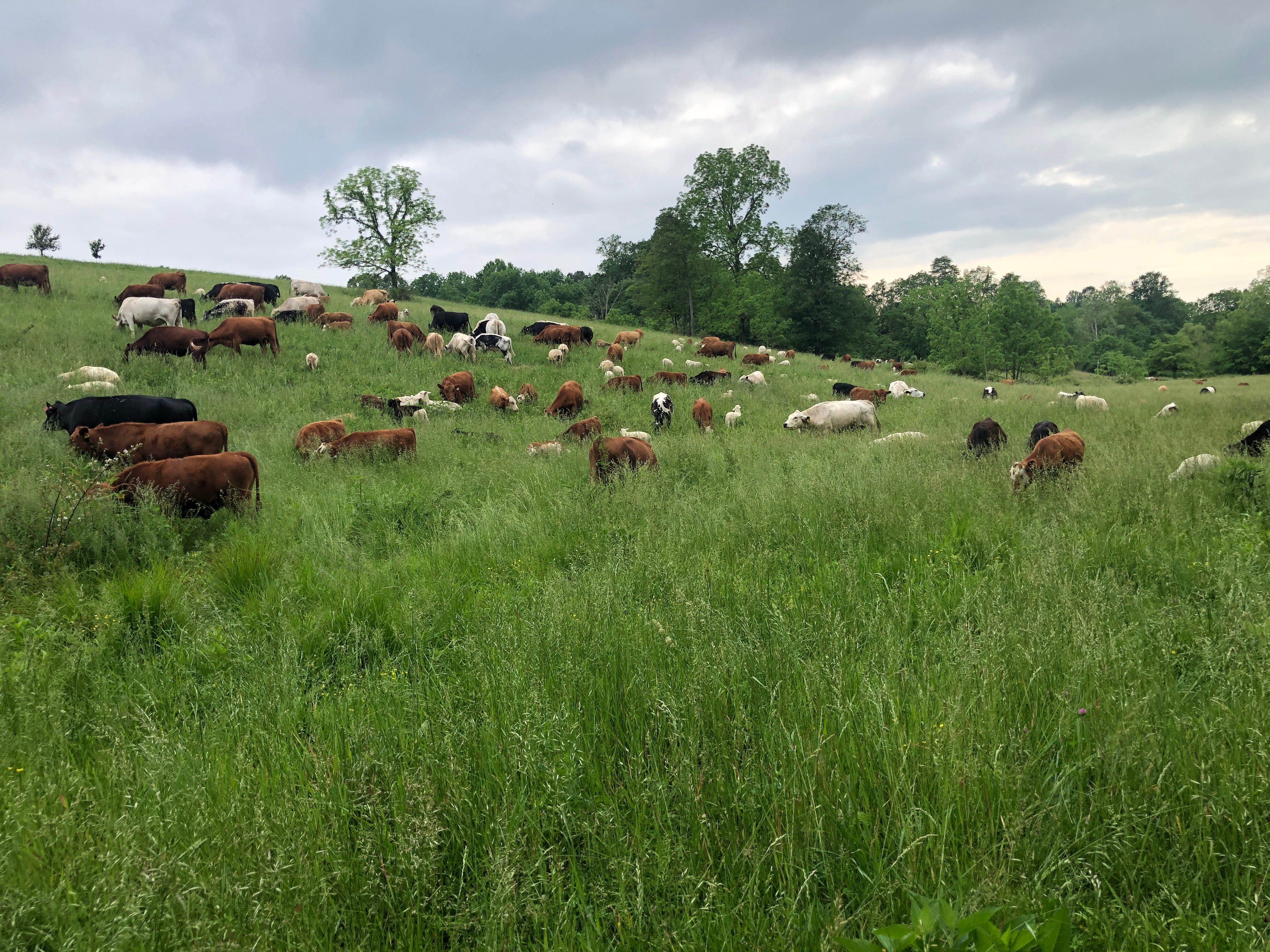
“…The common question is, “Should I mow, and if so, how high?” Of course, it depends; mowing costs around $25/ac, so we need to be sure the cost can be recouped. Grazing at high densities of around 40,000 pounds or higher of livestock per acre lays down a lot of the grass, greatly reducing or eliminating the need for mowing. Laying down residual grass also benefits soil health, creating more ground cover and feed for underground livestock. A rule of thumb is to keep light to desirable plants and shade out undesirable plants. Another commonly agreed practice is to control vegetation when weeds occupy 20% or more of a pasture. If I am going to mow, I prefer to mow after grazing and not mow over 20% of the total pasture acreage at one time. Mowing low has more impact on weeds, but remember another principle, manage for what you want, not what you don’t want. Another rule of thumb is to mow 2” into the leaf of grass. Typically, I mow to a 5” height. If the pasture is mostly weeds with little desirable grass, you’ll want to mow low but don’t mow lower than 3” on tall fescue-dominated pastures.” – full article, Greg Brann Timely Tips

Greg Brann, former USDA-NRCS Grazing Lands Specialist, currently Synergistic Grazing Management Consultant shares a wealth of knowledge and information on his site HERE that is worth the read!

brann

Posted in Uncategorized | Leave a comment

APSU AG MAJOR SCHOLARSHIP – DDL JUNE 1!

JUST A REMINDER – The application deadline for the David E. Hinton Conservation District Scholarship is two weeks from today – JUNE 1, 2023!

APSU The applicant must (1) be enrolled and/or attending Austin Peay State University and; (2) seeking completion of a bachelor degree program with a major in an agriculture related field (ex; Ag-Business, Ag- Science, Ag-Communications; Environmental Studies, Pre-Vet and Pre Forestry).

Applicants must complete and submit the following by JUNE 1ST :

  • Scholarship Application
  • minimum of two recommendation forms/letters
  • MOST CURRENT official transcript (may be emailed to NLHolt@mcgtn.net)

The David E. Hinton Scholarship will award $500/semester ($1000 max per year) and is payable directly to the college with the student(s) name as recipient.

The Montgomery County Soil & Water Conservation District Board of Supervisors will review the applications and choose the student(s) to be awarded the scholarship.

DOWNLOAD SCHOLARSHIP PACKET

Direct all questions to Nancy Holt, 931-368-0252 x 3 or nlholt@mcgtn.net

The programs and services of the Soil & Water Conservation District are offered and are available on a nondiscriminatory basis without regard to race, color, national, origin, age, sex religion, marital status, or handicap.
Posted in Uncategorized | Leave a comment

USDA opens full-time, entry-level soil conservationist positions across U.S. as part of broader effort to implement the Inflation Reduction Act

csp field“…NRCS soil conservationists offer conservation planning and technical help to agricultural producers, helping them implement practices that sequester carbon, mitigate against climate change and conserve other natural resources. This assistance helps producers who apply and are funded for the Environmental Quality Incentives Program, Conservation Stewardship Program, Agricultural Conservation Easement Program, Regional Conservation Partnership Program, and others.

How to Apply 

Click here to view the announcement. The announcement is currently open and close on May 15, 2023, at 11:59 p.m. EDT. Interested candidates can find more information and apply to the job on usajobs.gov

To qualify as a GS 5/7/9 soil conservationist, candidates must meet the education requirements, or a combination of education and experience requirements, as outlined in the job announcement. 

General qualifications for the soil conservationist job series are also available on OPM.gov. Also, watch NRCS’ recruitment video for soil conservationists or visit our Careers webpage to learn about other jobs with NRCS and other FPAC agencies.  

USDA is an equal opportunity provider, employer and lender.”

Posted in Uncategorized | Leave a comment