USDA Increases Assistance and Encourages SMART Nutrient Management Planning
NASHVILLE, September 22, 2022 – Beginning this September, USDA has encouraged producers to practice SMART Nutrient Management Planning to save money on fertilizer costs – which have increased significantly in the past year – with the added benefit of healthier soils, fewer greenhouse gas emissions, and cleaner water.
Producers could save an average of nearly $30 per acre on fertilizer costs if they implemented a nutrient management plan. A recent USDA report estimates that 28 percent of U.S. cropland (89 million acres) is currently receiving too many nutrients. This means these nutrients are lost to the environment, much of it ending up in the water supply; and it also means lost money for producers.
Nutrient management not only improves water quality, but also is an important part of climate-smart agriculture. Excess nutrients on the land can lead to nitrogen losses to the atmosphere. Nutrient management maximizes crop-nitrogen uptake and has a compelling and cost-effective role to play in mitigating greenhouse gas emissions from agriculture. The Inflation Reduction Act will deliver $19.5 billion in new conservation funding to support climate-smart agriculture, including for NRCS to improve opportunities for nutrient management.
USDA recently announced it is targeting funding, increasing program flexibilities, launching a new outreach campaign to promote nutrient management’s economic benefits, and expanding partnerships to develop nutrient management plans. In addition, USDA is increasing its technical assistance for nutrient management practices, including precision agriculture, helping farmers more efficiently use fertilizer and reduce costs. This includes streamlining the application process for certain NRCS conservation programs.
For more information on what USDA and NRCS are doing to help farmers address inflation and global food insecurity, see farmers.gov/global-food-insecurity.
SMART Nutrient Management Planning includes the 4Rs of nutrient stewardship – the right Source, right Method, right Rate and right Timing – and emphasizes smart activities to reduce nutrient loss by Assessment of comprehensive, site-specific conditions.
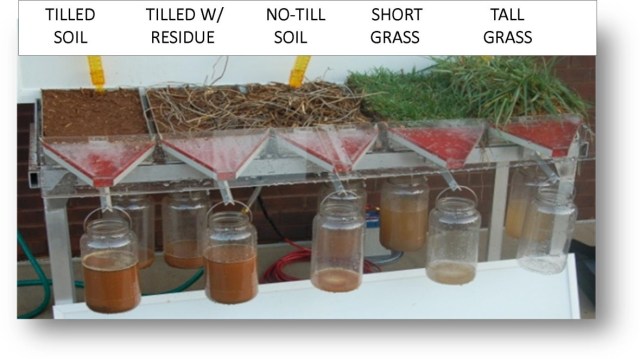
Each acre of land is unique and requires a tailored nutrient management plan to address the site-specific factors like local soil and climate conditions, the types of crops planted, and what conservation practices have been implemented, such as conservation tillage, no-till, or cover crops. Nutrient needs vary widely depending on these factors.
In addition, testing soil can help paint a clearer picture of what is currently happening on the land and better inform the path to healthier, more sustainable nutrient management. Soil may not need as much fertilizer as producers think, especially if practices such as conservation tillage, no-till, or cover crops are implemented. That’s because these practices naturally increase soil organic matter and soil biological processes. Testing can determine whether and how much fertilizer is needed.
And, for those practicing conservation tillage or no-till systems, it’s important to remember that specific sites may require nutrients to be incorporated into the soil, not just broadcast on the surface, for plants to adequately access them and to reduce the risk of nutrient loss in runoff events. Through these systems, nutrient placement with the planter or injection via a no-till, low disturbance application tool are effective methods for nutrient incorporation. If a broadcast method is utilized, some sites may benefit from a low intensity incorporation of manure or fertilizer following the application.
All types of operations, producers, and landowners can benefit from SMART Nutrient Management Planning, and many nutrient management practices are relatively inexpensive.
USDA’s Natural Resource Conservation Service (NRCS), a Technical Service Provider, or a Crop Consultant can help develop a SMART Nutrient Management Plan for producers and help them adopt practices that not only save money on fertilizer costs, but also improve their land’s soil health, climate resiliency and water quality.
Producers can contact NRCS at their local USDA Service Center for assistance in implementing nutrient management on their working land.
USDA touches the lives of all Americans each day in so many positive ways. In the Biden-Harris administration, USDA is transforming America’s food system with a greater focus on more resilient local and regional food production, fairer markets for all producers, ensuring access to healthy and nutritious food in all communities, building new markets and streams of income for farmers and producers using climate smart food and forestry practices, making historic investments in infrastructure and clean energy capabilities in rural America, and committing to equity across the department by removing systemic barriers and building a workforce more representative of America. To learn more, visit usda.gov.
USDA is an equal opportunity provider, employer and lender.
AVIAN INFLUENZA DETECTED IN TN, IMMEDIATE HALT TO POULTRY INTERACTIONS
According to the Tennessee Department of Agriculture, “a strain of highly pathogenic avian influenza (HPAI) has sickened a poultry flock in West Tennessee. To protect the health of other domesticated birds, the State Veterinarian is leading the emergency response and ordering an immediate halt to poultry shows, exhibitions, and sales statewide. HPAI is known to be deadly for domesticated fowl…”

“Penguin” photo by Alyssa Lehman
Dr. Samantha Beaty, Tennessee State Veterinarian, issued an immediate halt to poultry shows, exhibitions and sales statewide immediately. She wrote “This was not an easy decision. The Tennessee Department of Agriculture understands and values the importance of livestock competition and sales. Poultry is a vital part of Tennessee’s thriving agriculture industry and we are taking this step to safeguard that sector for the long term.
HPAI is known to be deadly for domesticated fowl. It’s critical we move quickly to stop the virus from spreading and we need your help to minimize the risk. We are working closely with our federal and state partners to coordinate resources and response, and we are following strict protocols for quarantine, testing, disposal, cleaning, disinfection, and monitoring.
For now, any events where poultry can comingle are prohibited. That includes poultry shows, exhibitions, livestock sales, flea markets, and swap meets.
Although HPAI does not pose a food safety risk, no infected poultry will be allowed to enter the food supply. Poultry and eggs are safe to eat when handled and cooked properly. The risk of human infection with avian influenza during poultry outbreaks is very low. In fact, no transmission to humans was reported during the outbreak that affected commercial poultry farms in Tennessee in 2017.
Owners of backyard and commercial poultry flocks are encouraged to closely observe domesticated birds and report a sudden increase in the number of sick birds or bird deaths to my office by calling 615-837-5120 or by calling USDA at 1-866-536-7593.
You can find more information about our response to this incident and resources for bird owners online at www.tn.gov/agriculture/businesses/animals/animal-health/avian-influenza.html. Thank you for helping us stop the spread of HPAI. If you have any questions or concerns, please contact my office at 615-837-5120 or Animal.Health@tn.gov.”